

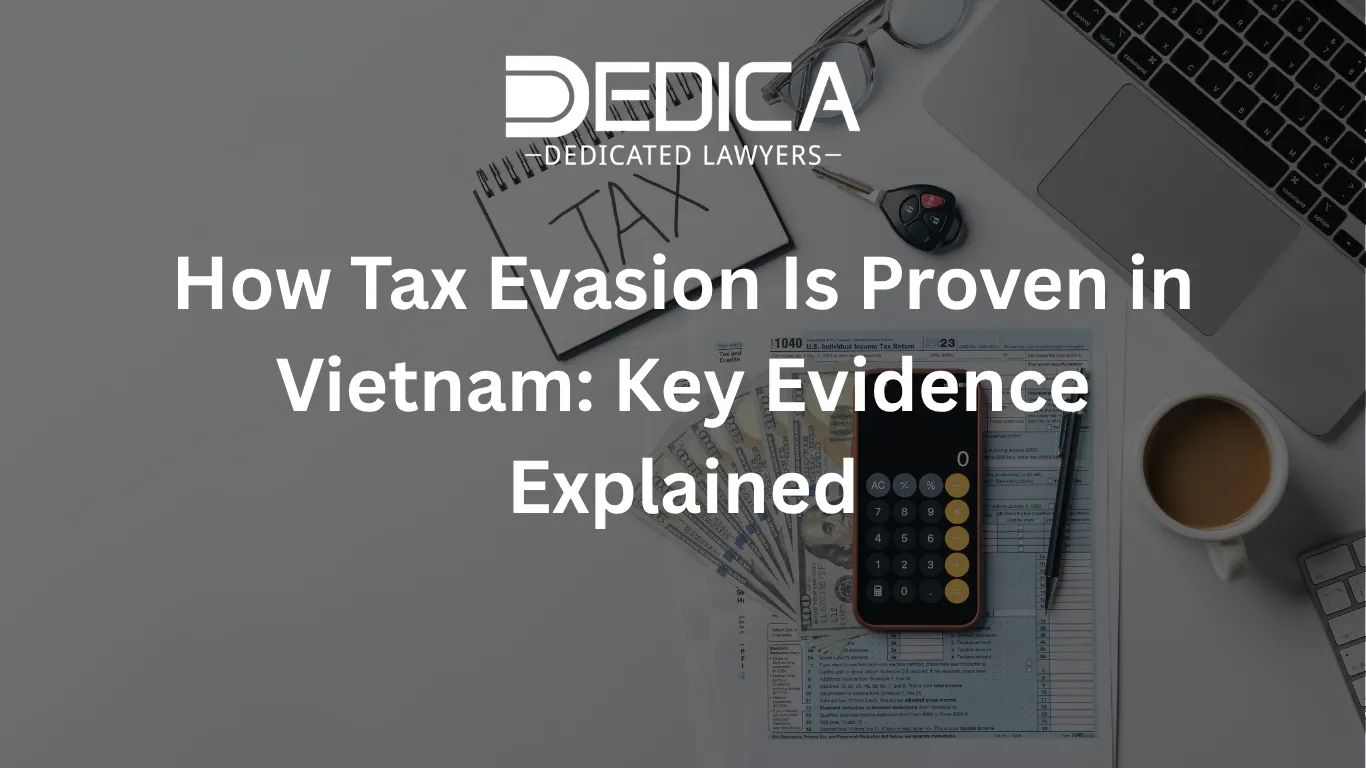
Are you being suspected of tax evasion in Vietnam? What kind of evidence do investigators rely on to build a case? Is there anything you can do now to protect your legal rights before the situation escalates?
What Evidence Do Authorities Use to Determine Tax Evasion?
When it comes to “tax evasion,” many people—especially foreigners living, investing, or working in Vietnam—often feel anxious: “Am I violating the law?”, “If I am investigated, what will they use against me?”
In reality, under the Vietnamese Criminal Code 2015 (as amended), tax evasion is only subject to criminal liability when there is sufficient evidence proving the violation, the amount of tax evaded, and the offender’s intent.
This means that investigating authorities cannot rely on mere suspicion—they must establish a clear and lawful body of evidence.
So what exactly counts as evidence? And if you have been summoned for questioning or are involved in an investigation, what should you understand to avoid putting yourself at further legal risk?
Accounting Records and Financial Documents
One of the most critical sources of evidence is the accounting system of a business or individual.
Authorities typically review:
- Input and output invoices
- Internal accounting books
- Financial statements
- Filed tax returns
Any discrepancy between actual business activities and declared figures may be considered an initial sign of tax evasion.
In one case handled by DEDICA, an FDI company underreported revenue by failing to issue invoices properly. However, data from business partners and banking transactions revealed actual cash flow significantly higher than reported figures.
This is often the point where investigators begin to “connect the dots.”
Banking Transactions and Cash Flow Analysis
For foreigners, using bank accounts in Vietnam or conducting cross-border transactions is very common. This also makes banking data a key focus area for investigators.
Authorities may examine:
- Bank statements
- International transfers
- Third-party payments
- Unexplained cash flow
If financial flows do not align with declared tax records, authorities may suspect concealment of taxable income.
In many cases, DEDICA’s clients were unaware that receiving payments through personal accounts instead of corporate accounts could be seen as a potential red flag.
Other Types of Evidence That May Raise Suspicion
Once financial data is collected, authorities will gather additional supporting evidence to strengthen their case. This is often the stage where individuals unintentionally make mistakes due to lack of legal awareness.
Statements, Emails, Contracts, and Internal Documents
Many people believe that “clean accounting books” are enough. However, in practice, emails, messages, and contracts can also serve as evidence.
Investigators may collect:
- Emails discussing the actual value of transactions
- Dual contracts (one declared, one actual)
- Internal messages about “avoiding taxes”
- Internal meeting minutes
Even a small detail in an email can become a critical piece of evidence demonstrating intent.
Tax Inspection Conclusions and Regulatory Data
Before a case turns into a criminal investigation, it often begins with a tax audit or inspection.
Authorities may rely on:
- Tax authority inspection conclusions
- Business audit reports
- Customs data (for import-export companies)
- Information from other regulatory bodies
Under Vietnamese law, when signs of a crime are identified, tax authority findings may be transferred to criminal investigators.
This often comes as a surprise to many individuals who initially believed it was merely an administrative issue.

What Should Foreigners Do If They Are Investigated for Tax Evasion in Vietnam?
If you or someone close to you is in this situation, the most important thing is not to panic—but to understand the situation clearly and act promptly.
Do Not Take a “Working Invitation” Lightly
A common mistake is thinking: “It’s just a normal meeting, nothing serious.”
In reality, every statement you make can be used as evidence.
You should keep in mind:
- You have the right to have a lawyer present from the earliest stage
- You are not obligated to answer questions that may be self-incriminating
- You should fully understand any document before signing
For foreigners, language barriers can lead to serious misunderstandings, which may negatively impact your case.
Prepare a Legal Strategy as Early as Possible
From DEDICA’s experience, the biggest difference between favorable and unfavorable outcomes often lies in how early a lawyer is involved.
A proper legal strategy can help:
- Clarify the true nature of transactions
- Distinguish between accounting errors and intentional misconduct
- Minimize the risk of criminal liability
- Protect your legal rights throughout the investigation
Important note: Each case is different. Whether conduct constitutes tax evasion depends on specific facts and applicable laws. No outcome can be guaranteed in advance.
When Should You Contact a Lawyer?
You should seek legal assistance immediately if:
- You receive a summons from the police or tax authorities
- You are asked to provide financial documents
- You suspect errors in your tax declarations
- A family member has been arrested or is under investigation
DEDICA is a law firm based in Ho Chi Minh City with extensive experience assisting foreign clients involved in criminal cases in Vietnam, particularly in finance, tax, and corporate matters.
We not only provide legal support but also help you understand the process, reduce stress, and make informed decisions at every step.
Conclusion
Investigating authorities do not determine tax evasion based on assumptions. They rely on a comprehensive system of evidence—from accounting records and banking transactions to emails, contracts, and tax inspection findings.
What truly puts you at risk is not the investigation itself—but not understanding what you are facing.
If you are in this situation, being proactive and seeking timely legal advice can help you avoid unnecessary legal risks and protect your rights.
Contact DEDICA Law Firm for Professional Legal Support
📞 Hotline: (+84) 39 969 0012 (Available via WhatsApp, WeChat, Zalo)
🕒 Working Hours: Monday – Friday (8:30 – 18:00)
Contact us today for a free initial consultation with our experienced lawyers!