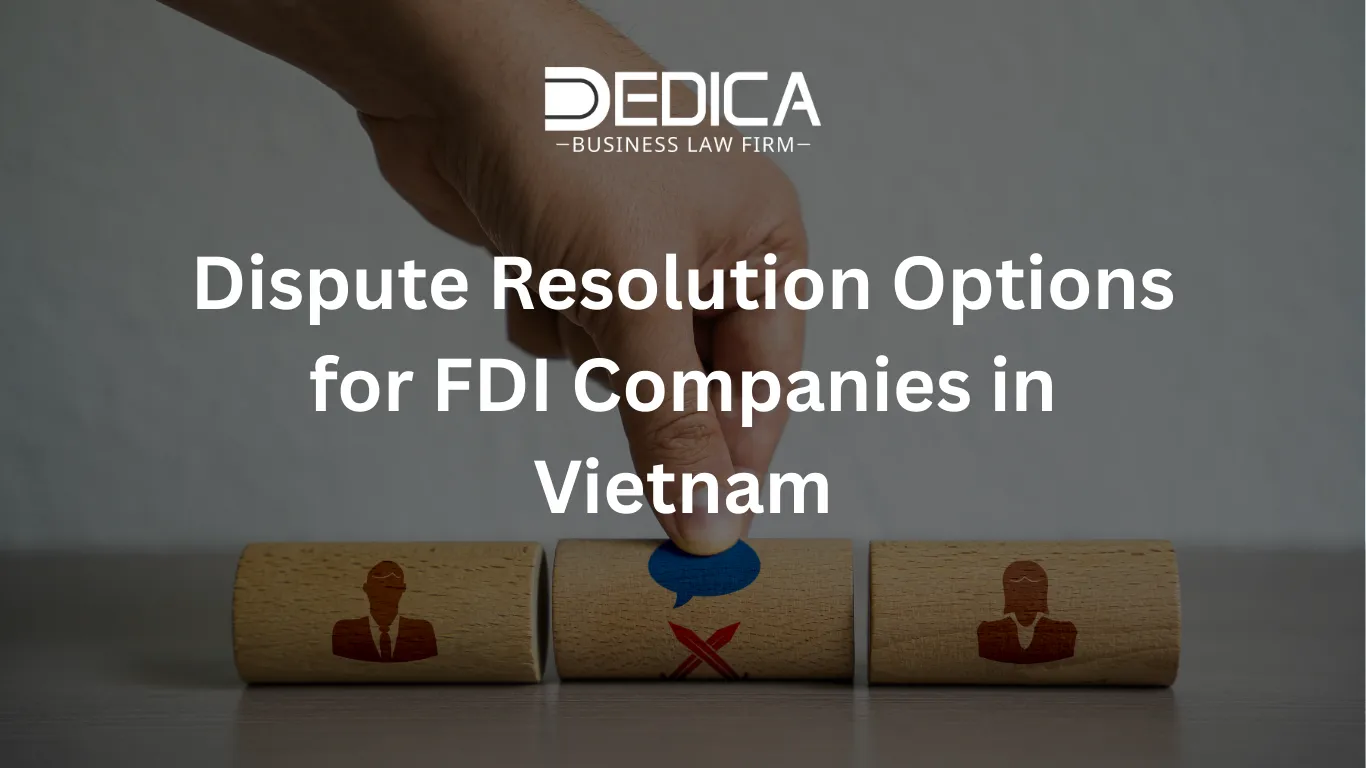
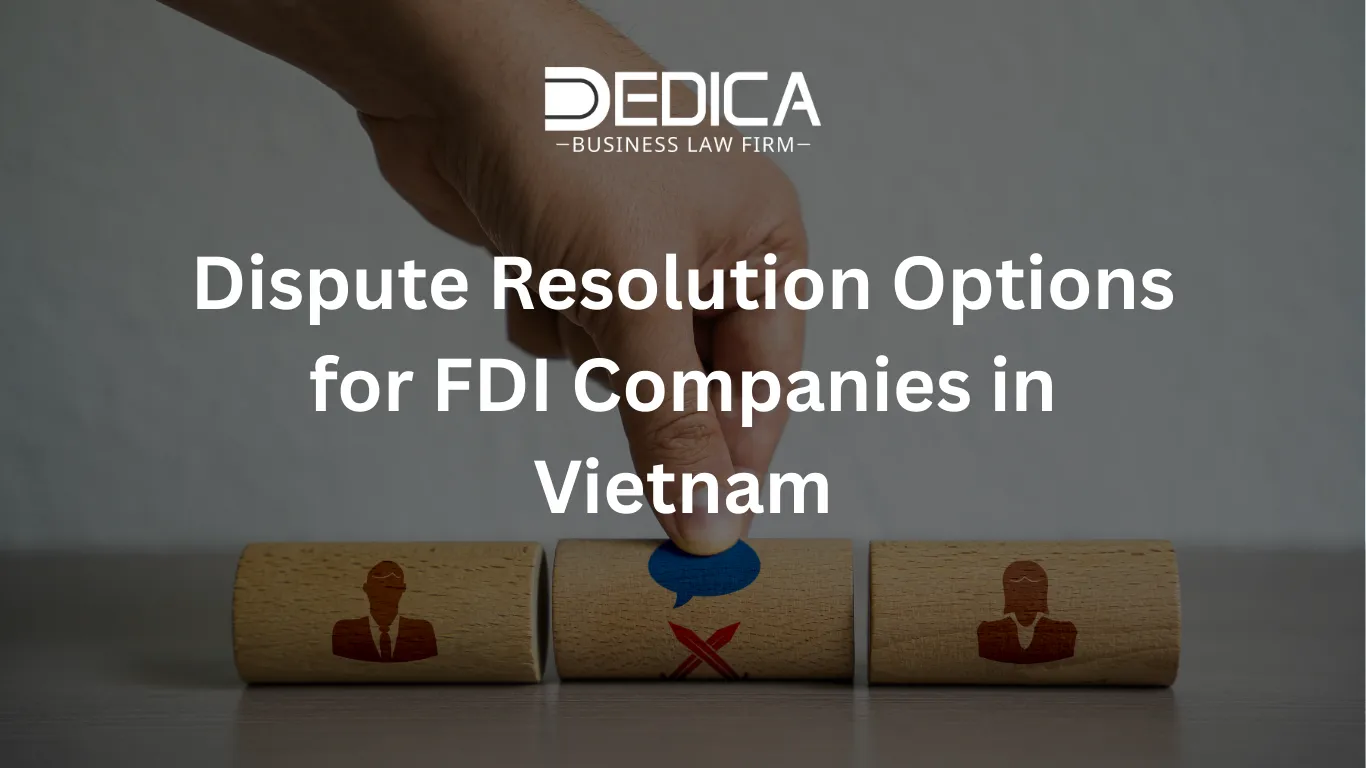
When a commercial dispute arises in Vietnam, foreign-invested enterprises (FDI companies) often face a difficult decision: which dispute resolution mechanism should be used?
Vietnamese law offers several options, including negotiation, mediation, commercial arbitration, and court litigation. Each mechanism has its own advantages, limitations, costs, and enforcement implications.
For FDI companies, choosing the wrong mechanism can result in delayed enforcement, higher costs, or even an unenforceable outcome. Therefore, the choice of dispute resolution mechanism should be a strategic business decision, not an afterthought.
Dispute Resolution Is More Than a Legal Formality
Many FDI companies only think about dispute resolution when a conflict has already escalated. At that point, choices are often limited by:
Existing contract clauses
Asset location of the counterparty
Procedural constraints under Vietnamese law
In reality, dispute resolution mechanisms should be assessed before disputes arise, ideally at the contract drafting and operational planning stages.
Negotiation: The First and Most Common Step
Negotiation is usually the first mechanism used when disputes occur.
For FDI companies, negotiation may be appropriate when:
The dispute is at an early stage
The business relationship is worth preserving
Legal positions are not yet fixed
However, negotiation without legal guidance can be risky. Informal communications, admissions of fault, or poorly structured compromises may weaken the company’s legal position if the dispute later escalates.
Negotiation works best when it is legally informed and strategically managed.
Mediation: Useful but Limited in Enforceability
Mediation is increasingly encouraged in Vietnam as a way to resolve disputes amicably.
Mediation can be suitable when:
Both parties are willing to compromise
Confidentiality is important
Speed is a priority
However, FDI companies should be aware that mediation outcomes depend heavily on voluntary compliance. Without a properly structured settlement agreement, enforcement may be difficult.
Mediation should be viewed as a complementary tool, not a guaranteed solution.
Commercial Arbitration: A Preferred Choice for Many FDI Companies
Commercial arbitration is often the preferred mechanism for FDI companies operating in Vietnam.
Key reasons include:
Neutrality in cross-border disputes
Confidential proceedings
Ability to choose arbitrators with commercial expertise
Stronger international enforceability
Vietnam is a signatory to the New York Convention, allowing arbitral awards to be recognized and enforced in many jurisdictions.
For disputes involving foreign parties, international contracts, or assets in multiple countries, arbitration often provides a more reliable enforcement path than court litigation.
Vietnamese Courts: Necessary in Certain Situations
Despite common concerns, Vietnamese courts are increasingly experienced in handling commercial and FDI-related disputes.
Court litigation may be appropriate when:
No valid arbitration agreement exists
Interim or urgent court measures are required
Third parties are involved who are not bound by arbitration clauses
The dispute is purely domestic and enforcement is local
However, court proceedings are public and often involve longer timelines and multiple procedural stages.
For FDI companies, the key issue is not whether courts are “good or bad,” but whether court litigation aligns with enforcement and business objectives.
Enforcement: The Most Critical Factor for FDI Companies
Many FDI companies focus on where they can win the dispute, rather than where they can enforce the outcome.
Before choosing a dispute resolution mechanism, companies should assess:
Where the counterparty’s assets are located
Whether judgments or awards can be enforced in Vietnam
Recognition procedures under Vietnamese law
A favorable decision that cannot be enforced provides little commercial value.
Arbitration vs Court: A Strategic Comparison
Arbitration often offers:
Better cross-border enforceability
Confidentiality
Flexibility
Court litigation offers:
Authority of the state
Easier access to interim measures
Applicability when arbitration is unavailable
There is no universal answer. The correct choice depends on contract structure, asset location, and dispute profile.
The Role of Dispute Resolution Clauses in Contracts
For FDI companies, the dispute resolution clause is one of the most important contractual provisions.
Poorly drafted clauses may:
Create jurisdictional confusion
Delay proceedings
Prevent arbitration entirely
Dispute resolution clauses should be clear, precise, and aligned with the company’s enforcement strategy.
This requires legal input before contracts are signed, not after disputes arise.
Why Case-by-Case Legal Advice Is Often Insufficient
Many FDI companies consult lawyers only when disputes escalate. By then:
Contracts may already limit dispute options
Arbitration clauses may be defective
Enforcement risks may be unavoidable
Reactive legal advice reduces flexibility and increases cost.

How Ongoing Legal Consultancy Supports Better Dispute Strategy
With ongoing legal consultancy, FDI companies can:
Design contracts with effective dispute resolution mechanisms
Align dispute strategy with business objectives
Assess enforcement risks in advance
Respond quickly and strategically when disputes arise
This proactive approach significantly reduces uncertainty and risk.
Especially Important for FDI Companies Operating in Vietnam
FDI enterprises face unique challenges:
Cross-border enforcement complexity
Different legal culture and procedures
Language and documentation barriers
Without local legal support, dispute resolution mechanisms may not function as intended.
How DEDICA Law Firm Supports FDI Dispute Resolution Strategy
DEDICA provides ongoing legal consultancy services tailored for FDI companies operating in Vietnam.
DEDICA assists clients by:
Advising on negotiation, mediation, arbitration, and court litigation
Drafting and reviewing dispute resolution clauses
Assessing enforcement feasibility in Vietnam
Representing clients in disputes
Preventing disputes through early legal oversight
DEDICA’s approach focuses on practical enforceability, risk control, and long-term business protection.
Conclusion
For FDI companies, choosing the right dispute resolution mechanism in Vietnam is not a purely legal decision—it is a strategic business choice.
Negotiation, mediation, arbitration, and court litigation each have a role, but they must be selected based on:
Contract terms
Asset location
Enforcement feasibility
Business priorities
By involving legal advisors early—ideally through ongoing legal consultancy—FDI companies gain the clarity needed to choose the right mechanism, reduce risk, and protect long-term interests.
Contact DEDICA Law Firm for Professional Legal Support
📞 Hotline: (+84) 39 969 0012 (Available via WhatsApp, WeChat, Zalo)
🕒 Working Hours: Monday – Friday (8:30 – 18:00)
Contact us today for a free initial consultation with our experienced lawyers!