
No table of contents available
Franchising in tourism and resort real estate has become an increasingly attractive investment channel in Vietnam. However, when disputes arise, businesses and investors must clearly understand the dispute resolution mechanisms, as well as their legal rights and obligations, to protect their interests. This article provides an in-depth analysis of franchise disputes in tourism and resort real estate, exploring their causes, legal implications, and practical solutions in Vietnam.
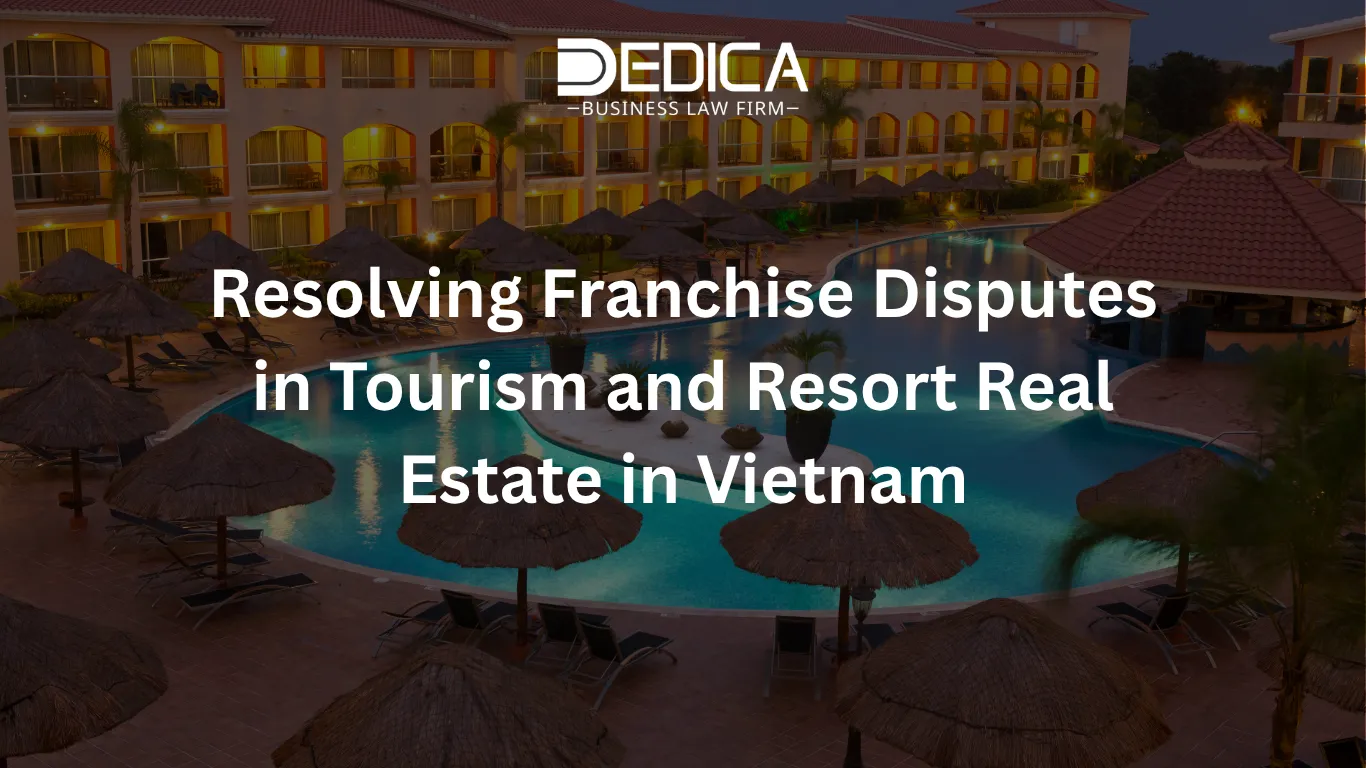
In Vietnam, tourism and resort real estate franchising typically involves an investor (or project operator) granting a franchisee the right to exploit, operate, or partially own a product such as a condotel, resort villa, holiday home, or the “management–operation rights” of a resort project.
Because this model combines both real estate and hospitality business elements, it carries significant legal risks. Although Vietnam’s resort real estate market is rebounding strongly and is seen as a “catalyst” for tourism growth, the legal framework for this segment remains incomplete.
Franchise disputes in tourism and resort real estate often arise from:
Transaction conditions: Properties (e.g., condotels or villas) being sold or leased before meeting legal requirements—such as lacking construction permits or unclear land-use rights—leading to investor risks.
Contractual ambiguity: Unclear terms on profit commitments, handover timelines, operation rights, or liabilities between the franchisor and franchisee. For instance, “vacation ownership” models may not constitute property ownership, causing the buyer to lose their rights.
Payment and delivery issues: Overcollection, delayed handovers, or projects failing to operate as promised. These are among the most frequent disputes in resort real estate transactions.
Ownership and land-use rights: Since resort properties (e.g., condotels, resort villas) are not yet legally recognized as “residential houses,” ownership certificates and transfer rights remain uncertain.
The root causes include an evolving legal framework for resort real estate, lack of transparency between developers and investors, poorly drafted franchise contracts, and insufficient legal due diligence before investment.
a) Verify the project’s legal status
Ensure that the resort real estate project satisfies business conditions under the 2023 Law on Real Estate Business (effective January 1, 2025), such as: commencement of construction, valid land-use rights or lease agreements, construction permits, and public disclosure of project information.
For resort projects, confirm that the development has been approved for “tourism and accommodation” purposes and that it possesses the necessary infrastructure and operating rights.
b) Clarify the franchise contract
The contract should clearly specify rights and obligations—who operates the property, who bears the costs, duration of operation, profit commitments (if any), and procedures for addressing breaches.
Investors should carefully review potentially unfair terms, such as exclusivity clauses, vague profit guarantees, or high annual fees.
c) Anticipate risks and define dispute resolution mechanisms
The parties should agree in advance on methods of dispute resolution: negotiation, mediation, arbitration, or court proceedings.
Also, verify that deposit and payment provisions comply with the 2023 Law on Real Estate Business—for example, deposits for off-plan properties must not exceed 5% of the selling price—to avoid overpayment risks.

a) Negotiation and internal mediation
When disputes arise (e.g., delayed handover or failure to meet profit commitments), the first step should be negotiation or mediation, which saves time and cost.
b) Arbitration or court litigation
If negotiation fails, parties may bring the dispute to arbitration (if specified in the contract) or to court. Essential evidence includes the franchise contract, payment receipts, handover records, marketing materials, and proof of breach.
Under the 2023 Law on Real Estate Business, developers selling off-plan properties—whether residential or resort—must meet legal conditions under Article 24. Disputes often stem from violations of these conditions.
c) Contract termination and compensation claims
If the franchisor or developer seriously breaches the contract—such as by overcollecting payments, failing to deliver, or misrepresenting returns—the franchisee may seek contract termination and compensation. However, in practice, recovering funds can be difficult if the developer faces insolvency or if the contract terms are vague.
d) Administrative or civil proceedings
If a developer transfers a project that fails to meet legal requirements, it may face administrative fines. For example, transferring a real estate project without valid land-use rights can result in penalties ranging from VND 800 million to VND 1 billion.
Vietnam’s tourism and resort real estate market is entering a dynamic phase, attracting both major corporations and individual investors. Yet, its rapid growth comes with substantial legal risks—especially in franchise models involving operation, management, or partial ownership of condotels and resort villas.
To avoid becoming a victim of ambiguous contracts or legally non-compliant projects, investors should conduct thorough legal due diligence, review franchise agreements carefully, and clearly define each party’s rights and obligations. When disputes occur, selecting the right legal strategy—whether negotiation, mediation, arbitration, or litigation—plays a decisive role in safeguarding one’s legitimate interests.
With proper preparation and professional legal guidance, investors can not only minimize risks but also seize the full potential of Vietnam’s promising resort and tourism real estate market.
📞 Hotline: (+84) 39 969 0012 (Available on WhatsApp, WeChat, and Zalo)
🏢 Head Office: 144 Vo Van Tan Street, Xuan Hoa Ward, Ho Chi Minh City (144 Vo Van Tan Street, Vo Thi Sau Ward, District 3, Ho Chi Minh City)
🕒 Business Hours: Monday – Friday (8:30 AM – 6:00 PM)
Reach out today for a free initial consultation with our team of professional lawyers!

Select a platform to view details


