
No table of contents available
The sudden appearance of police requesting to search a residence or workplace is one of the greatest fears for foreigners living and working in Vietnam. Many immediately worry:
“Did I do something wrong?”
“Do they have the right to enter my home?”
“If I object, will I be arrested on the spot?”
As lawyers who regularly advise and protect the rights of foreigners in criminal matters in Vietnam, DEDICA Law understands that at such moments, the most important thing is not confrontation—but a correct understanding of the law so you can protect your legitimate rights.
This article will help you:
Understand when a search is lawful
Identify signs of an unlawful search
Know what you are allowed and not allowed to do
Recognize when a lawyer should intervene immediately
Note: This article provides general legal information only and does not determine the outcome of any specific case.
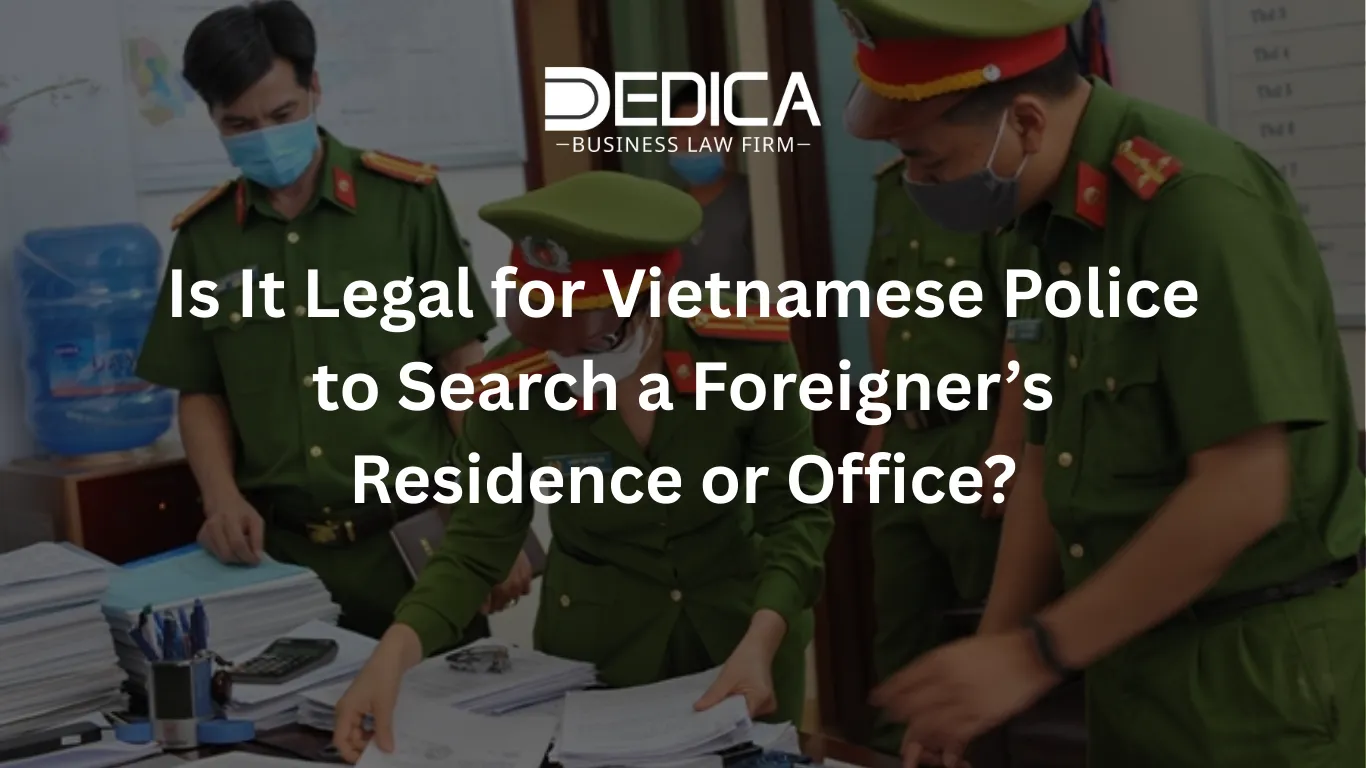
A search is a strict investigative measure, not something authorities may conduct at will. For foreigners, this principle must be applied even more carefully, as it involves human rights and diplomatic considerations.
Under the Vietnamese Criminal Procedure Code 2015 (currently in force), a search is only lawful when all statutory conditions are fully met.
Police are not permitted to conduct a search based on vague or general suspicion. A search may only be carried out when:
There are grounds to believe the residence or office contains tools, documents, or objects related to a crime, or
The search is necessary to arrest a person or collect evidence in a specific criminal case.
If you have merely been “invited to work” with the authorities and have not been formally charged, any search must be scrutinized very carefully for its legal basis.
In most cases, police must present a written search warrant issued by:
The Head or Deputy Head of the Investigation Authority, and
Approved by the People’s Procuracy (except in emergency cases).
A lawful search warrant must clearly state:
The location to be searched
The reason for the search
The name of the person subject to the search
The time and authority conducting the search
You have the right to request to see this warrant before the search is carried out.
This is the situation that causes the most confusion and anxiety for foreigners.
Under Vietnamese law, an emergency search is only permitted when:
There are grounds to believe that evidence may be destroyed if the search is not conducted immediately, or
There is a risk that the person involved may flee.
However, even in emergency cases:
A full written record (minutes) of the search must still be prepared
The search must later be reported to and approved by the People’s Procuracy
If a search is conducted hastily, without clear explanation, this is a strong signal that a lawyer should be involved immediately.
This is the most critical part—yet one that many people are unaware of. And lack of knowledge often leads individuals to unintentionally put themselves at a disadvantage.
During a search:
You (or your legal representative) have the right to be present
Witnesses must be present, such as a local authority representative or local residents
Without witnesses, the legality of the search record may be challenged.
After the search:
Police must prepare written minutes
You have the right to read every line carefully
You may record your opinions, objections, or complaints directly in the minutes if you believe there are inaccuracies or violations

Vietnamese law does not prohibit foreigners from engaging a lawyer at the search stage.
In practice, having a lawyer present helps to:
Monitor the legality of the procedure
Prevent seizure of documents or devices unrelated to the case
Reduce the risk of statements or actions being misunderstood or misinterpreted
Many people believe: “If the authorities are wrong, I’ll be cleared later.”
In reality, the damage often occurs immediately at the time of the search, including:
Seizure of computers and phones containing personal and business data
Exposure of sensitive business or partner information
Negative impact on visas and work permits
Psychological pressure leading to unfavorable statements
A lawyer cannot “turn back time,” but early legal intervention can:
Officially record procedural violations
Protect your rights in subsequent stages
Create a stronger legal foundation if the investigation continues
📞 Hotline: (+84) 39 969 0012 (Available via WhatsApp, WeChat, Zalo)
🕒 Working Hours: Monday – Friday (8:30 – 18:00)
Contact us today for a free initial consultation with our experienced lawyers!

Select a platform to view details


