
No table of contents available
Foreigners who are detained or held in custody in Vietnam often experience confusion and fear. Language barriers, unfamiliar legal procedures, and cultural differences can make it difficult to understand what rights they have, what steps to take first, and whether the situation will have long-term consequences for their work, investments, or personal reputation. In such circumstances, properly understanding the legal nature of the case and obtaining timely legal guidance are critical factors that can shape the entire outcome.
Through our experience advising and participating in criminal cases involving foreign elements in Vietnam, we have observed that the most common concern among clients is uncertainty about their legal status. Many individuals are initially “invited to work” with the police, only to find themselves detained or placed in custody without clearly understanding the reasons, the duration, or whether they will face criminal prosecution.
For foreigners, this fear is intensified by language differences, unfamiliarity with Vietnam’s legal culture, and concerns about unequal treatment compared to Vietnamese citizens. In some cases, individuals assume that detention automatically means imprisonment or deportation.
However, from a legal perspective, detention or temporary custody does not mean guilt has been established. These are preventive measures applied during criminal investigations when authorities believe it is necessary to clarify the case. Understanding this distinction from the beginning allows the foreign individual and their family to respond appropriately and avoid decisions that could negatively impact the case later.
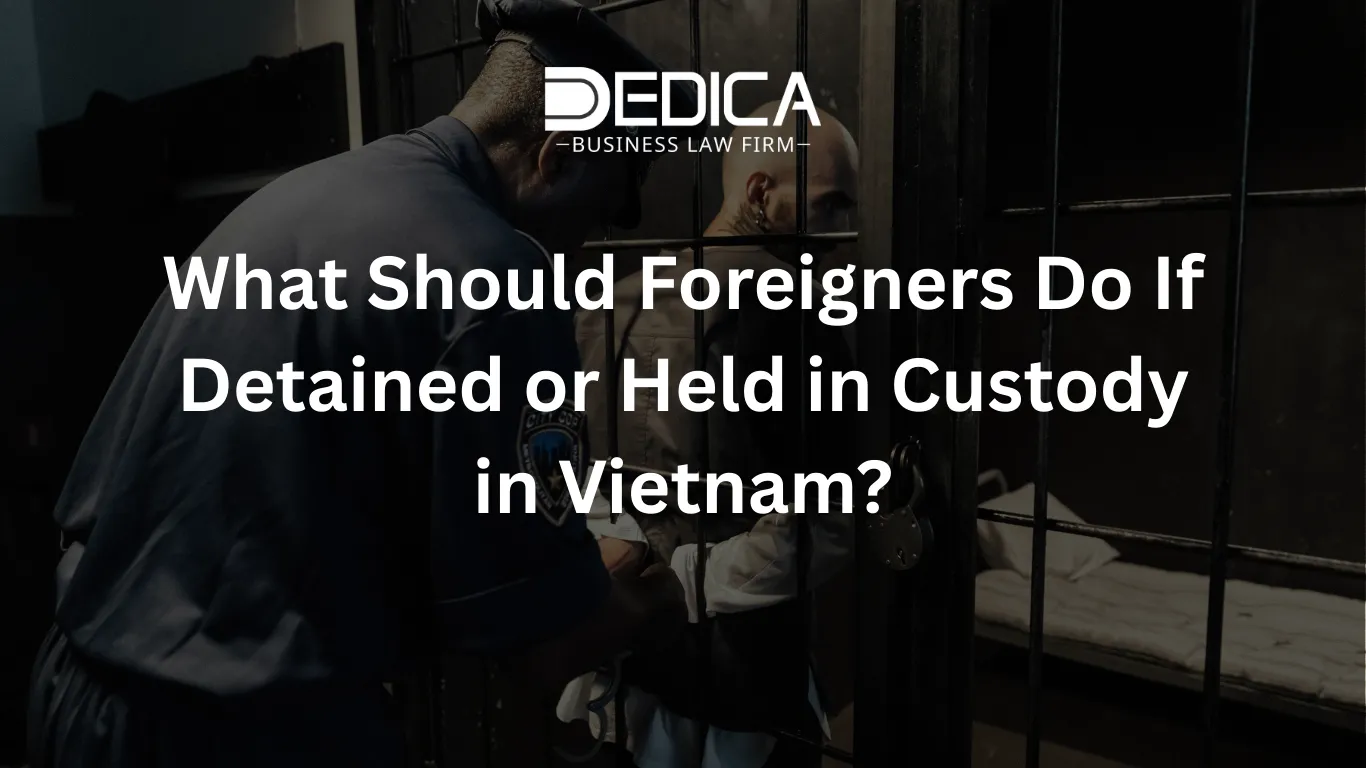
In practice, many foreigners do not clearly distinguish between temporary detention and temporary custody. Under the 2015 Criminal Procedure Code of Vietnam, temporary detention may apply in urgent cases, cases involving individuals caught in the act, voluntary surrender, or arrests pursuant to a wanted decision. Temporary custody, on the other hand, applies to suspects or defendants accused of particularly serious, very serious, or certain serious and less serious crimes under specific conditions.
The line between these stages can be thin, especially when the detained person does not have proper legal support. One of the greatest risks for foreigners is their limited understanding of Vietnamese law. They may not fully comprehend the content of official records or statements and may inadvertently provide testimony that harms their own position.
In several cases DEDICA has handled, matters initially related to civil disputes or administrative violations escalated into criminal investigations due to improper handling or lack of careful legal strategy. Causes of detention for foreigners vary widely: visa and residency issues, work permit problems, business or investment activities, financial transactions, or contractual disputes. In some situations, individuals face criminal liability simply because they are listed as legal representatives of a company, even if they were not directly involved in management or decision-making.
Vietnamese law ensures that foreigners involved in criminal proceedings are entitled to fundamental rights similar to Vietnamese citizens. These rights include:
In practice, many foreigners are unaware that they can request a lawyer from the moment of detention. Out of fear or a belief that full cooperation alone will secure early release, some individuals provide statements without legal advice. This carries significant risk, as initial statements can directly influence the entire investigation process.
It is important to emphasize that engaging a lawyer is not an act of confrontation with investigative authorities. Rather, it is a lawful way to protect one’s rights and legitimate interests within the framework of Vietnamese law.
If detained or held in custody, the most important action is to remain calm and avoid emotional reactions. Arguing aggressively, overreacting, or signing documents without fully understanding their content can create serious disadvantages.
Foreign nationals should clarify their legal status, ask under what legal basis the detention or custody decision has been issued, and confirm its duration. If they do not understand Vietnamese, requesting an interpreter is both lawful and necessary.
Simultaneously, contacting a lawyer experienced in criminal cases involving foreign elements in Vietnam is a strategic step. A lawyer not only provides legal advice but also serves as a bridge between the detained person, their family, investigative authorities, and diplomatic representatives.
In criminal cases involving foreigners, a lawyer’s role extends far beyond courtroom defense. The most critical stage is often the investigation phase, when statements, documents, and evidence are being formed.
A lawyer participates in meetings with investigative authorities to ensure questioning is conducted lawfully and that fundamental rights are respected. They analyze case files, assess legal risks, and advise on appropriate strategies at each stage of the proceedings.
For family members or friends, a lawyer provides essential updates, explains the legal situation, and assists with procedures such as visitation requests, delivery of personal items, and communication with diplomatic authorities.
One of the most serious risks is misunderstanding rights and obligations during the proceedings. This can lead to inconsistent or unfavorable statements and the signing of documents without proper explanation.
Foreign nationals without legal representation may also struggle to access information about the progress of the case or to file complaints if procedural violations occur. In certain cases, delays in engaging a lawyer may result in missed opportunities to apply for less restrictive preventive measures, such as bail or travel restrictions instead of custody.

DEDICA is a professional law firm in Vietnam with extensive experience advising and representing foreign nationals in criminal cases, whether as defense counsel, representatives of victims, or legal representatives of related parties.
We understand that cases involving foreign elements are highly sensitive. They require not only strong legal expertise but also cultural awareness, psychological insight, and effective communication with Vietnamese authorities. Our lawyers have worked at international law firms and multinational corporations, are fluent in English, and provide careful, strategic, and lawful legal support.
It is important to note that in criminal matters, no lawyer can or should guarantee a specific outcome. All legal advice is based on the specific facts, available evidence, and applicable law, with the goal of helping clients clearly understand their legal position and choose the most appropriate course of action.
In many cases, the detained person may not be in a position to contact a lawyer immediately. In such situations, proactive action by family members or friends to engage a reputable law firm in Vietnam is crucial.
Timely legal support can stabilize the detainee’s psychological condition and ensure that fundamental rights are respected from the earliest stage. This often becomes a decisive factor in the later development of the case.
Being detained or held in custody in Vietnam is a serious situation, but it is not the end of the road. The key is to remain calm, understand the legal nature of the issue, and obtain timely support from experienced legal counsel.
If you or a loved one is facing a similar situation, seeking early legal advice can help protect legitimate rights and minimize risks throughout the proceedings.
Are you or someone close to you facing a similar issue?
Contact DEDICA Law for strategic legal advice tailored to your case.
📞 Hotline: (+84) 39 969 0012 (Available via WhatsApp, WeChat, Zalo)
🕒 Working Hours: Monday – Friday (8:30 – 18:00)
Contact us today for a free initial consultation with our experienced lawyers!

Select a platform to view details


