Are you or your loved one a foreigner being investigated for a criminal matter in Vietnam? Are you worried about how a criminal trial in Vietnam works, whether you are entitled to an interpreter, or how long pre-trial detention may last?
This article will help you understand the legal process, your rights, and safe, lawful ways to protect yourself.
Criminal Trials in Vietnam for Foreigners: Procedures and Key Things to Understand
When a foreigner commits an offense in Vietnam or is alleged to be involved in a criminal case, the first reaction is often fear and confusion. A different legal system, language barriers, and unfamiliar procedures can make anyone feel vulnerable.
However, under current Vietnamese law — particularly the Criminal Procedure Code 2015 (amended 2021) and the Criminal Code 2015 (amended 2017) — foreigners involved in criminal proceedings in Vietnam are guaranteed fundamental rights similar to Vietnamese citizens. In addition, there are specific protections related to consular notification and language assistance.
Are Foreigners Tried the Same as Vietnamese Citizens?
Under Article 5 of the Criminal Code 2015, all criminal acts committed within the territory of Vietnam fall under Vietnamese jurisdiction, regardless of nationality.
This means:
- If the alleged offense occurred in Vietnam, Vietnamese authorities have the power to investigate, prosecute, and adjudicate.
- Cases involving diplomatic immunity are handled in accordance with international treaties.
Many foreigners worry: “Will I be treated more harshly because I am not Vietnamese?”
Vietnamese law does not impose heavier penalties solely based on nationality. Sentencing depends on the nature of the offense, the level of damage, personal background, and statutory mitigating or aggravating factors.
Each case is unique. Outcomes depend on evidence, documentation, and the defense strategy. No lawyer can ethically guarantee a specific result.
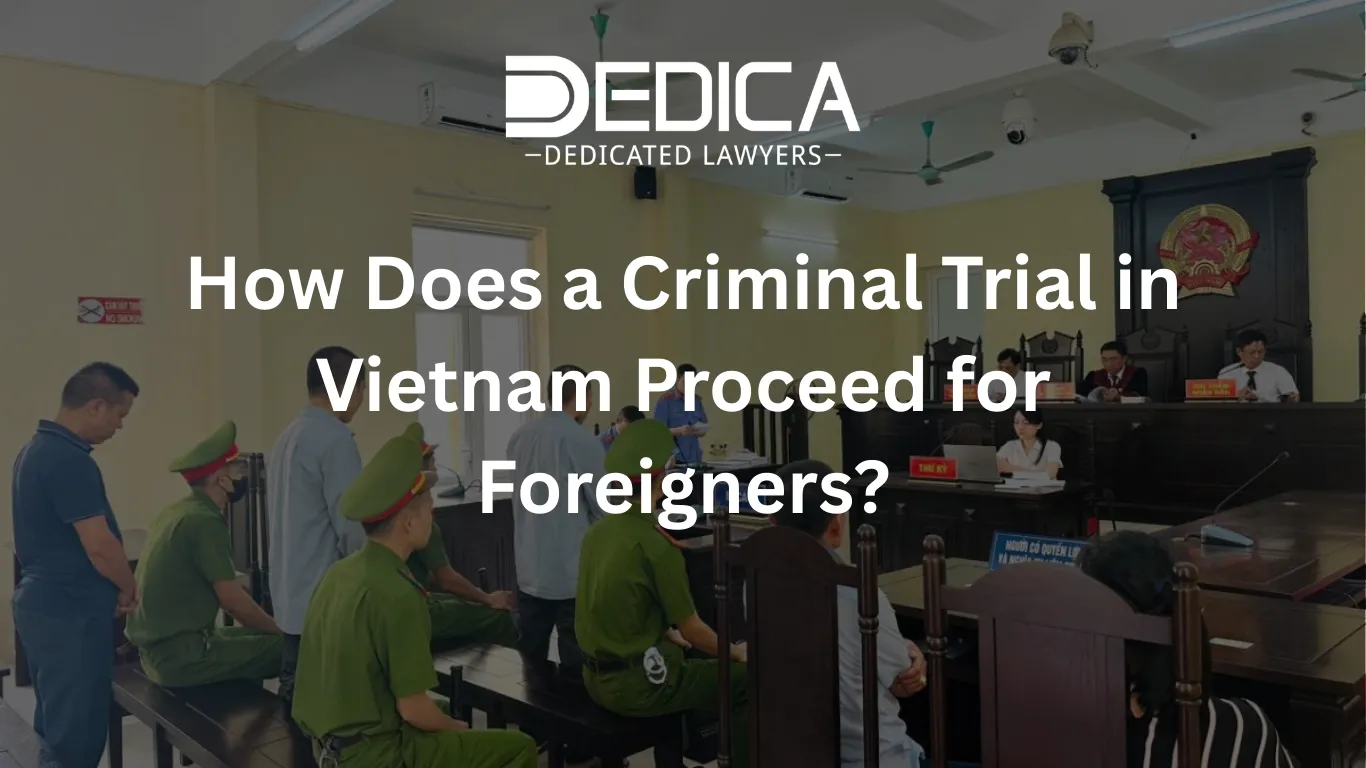
What Is the Procedure of a Criminal Trial in Vietnam?
A criminal case involving a foreigner typically goes through three main stages:
- Investigation stage – conducted by the Investigation Police Agency.
- Prosecution stage – the People’s Procuracy reviews the file and issues an indictment.
- First-instance trial – the competent People’s Court conducts the trial.
During the trial:
- A Trial Panel (Judge and People’s Jurors) presides.
- The Procuracy exercises prosecutorial authority.
- The defendant has the right to a defense lawyer.
- If the defendant does not understand Vietnamese, an interpreter must be appointed under Article 29 of the Criminal Procedure Code 2015.
Trials are generally public unless otherwise provided by law. The defendant has the right to present arguments, debate evidence, and make a final statement before judgment is rendered.
Rights of Foreigners in Criminal Proceedings in Vietnam
Many clients approach DEDICA in fear simply because they do not know their rights. Lack of information can sometimes be more frightening than the case itself.
Vietnamese law clearly protects the rights of accused persons, including foreigners.
Right to an Interpreter and Consular Notification
Under procedural law:
- Foreigners have the right to use their own language.
- Authorities must appoint an interpreter if the person does not understand Vietnamese.
- Competent authorities must notify the consular office of the individual’s nationality in accordance with applicable treaties.
This is crucial. Interpreter access and consular support help ensure rights are not compromised due to language barriers or misunderstandings.
Right to a Lawyer from the Investigation Stage
Under Articles 72 and 75 of the Criminal Procedure Code 2015, an accused person has the right to retain a lawyer from the moment of detention, temporary custody, or formal charges.
In practice, many foreigners only seek legal counsel after indictment or shortly before trial — by which time initial statements may already have become important evidence.
Early legal representation helps to:
- Advise on how to work with investigators.
- Ensure interrogations follow proper procedure.
- Request lighter preventive measures where eligible (e.g., bail or travel restrictions instead of detention).
- Collect favorable evidence.
In Ho Chi Minh City and other provinces, DEDICA has represented foreign clients in various criminal matters, ranging from business-related disputes with criminal elements to cases involving residency, commercial activities, or contractual issues.
Each case requires a tailored strategy. There is no one-size-fits-all solution.

How DEDICA Supports Foreigners in Criminal Cases
For foreigners, a criminal case in Vietnam is not only a legal matter. It may also involve:
- Risk of losing residency rights.
- Impact on visas and work permits.
- Damage to personal and corporate reputation.
- Risk of deportation after serving a sentence.
Therefore, a defense strategy must take a comprehensive approach — not just focus on the trial itself.
Case Assessment and Legal Strategy Development
When handling a case, lawyers will:
- Review decisions on prosecution and detention.
- Analyze the legal elements of the alleged offense.
- Evaluate incriminating evidence and possible counterarguments.
- Identify mitigating factors under Article 51 of the Criminal Code 2015 (e.g., voluntary compensation, sincere cooperation).
We always clearly inform clients: while no specific outcome can be guaranteed, we commit to making every lawful effort to protect legitimate rights and interests.
Representation Before Authorities and at Trial
Defense lawyers may:
- Attend interrogations.
- Petition for collection of favorable evidence.
- Present arguments at trial.
- Propose mitigating circumstances or appropriate sentencing.
- Advise on appeal rights after the first-instance judgment.
In many cases, careful preparation and appropriate cooperation can positively influence the court’s assessment.
However, every case depends on evidence and the evaluation of competent authorities. This article provides general information only and does not replace specific legal advice.
Frequently Asked Questions
1. Can a foreigner be deported?
Under the Criminal Code, deportation may be imposed as a principal or additional penalty depending on the offense and court decision.
2. Is release on bail possible?
Vietnamese law allows preventive measures other than detention where conditions are met. Approval depends on the authorities’ assessment.
3. Can family members abroad assist?
Yes. Family members may authorize a lawyer in Vietnam, contact the consulate, and provide financial or documentary support.
Contact DEDICA Law Firm for Professional Legal Support
📞 Hotline: (+84) 39 969 0012 (Available via WhatsApp, WeChat, Zalo)
🕒 Working Hours: Monday – Friday (8:30 – 18:00)
Contact us today for a free initial consultation with our experienced lawyers!